

Monaghan Music
Tiarnán gives talks on William Clarke 1889-1934 | The Ballybay Piper and Pipemaker .
Left Tiarnán playing some of the collected music of Monaghan from the James Whiteside Collection | Right Lullaby for Uilleann Pipes - James Whiteside, Monaghan
Rossmore Pipes
Tiarnán was asked to curate the Rossmore pipes project. From restoration of the Pipes, the Rossmore collection of tunes and concert performance of the pieces.
Video: The Airs That Once Through Rossmore's Halls - Rossmore Walled Garden 2021
Featuring: Luc Gaugler, Arranger, Viol de Gambe, Tiarnán Ó Duinnchuinn, uilleann pipes, Laoise Kelly, harp, Zoe Conway, fiddle/voice, Caoimhín Vallely, harpsichord, Cormac Breatnach, whistles, Eamon Sweeney, Baroque guitar, Ronán Browne, narrator
Baroque Music
Tiarnán includes music from the Baroque period in his repertoire.
Left J.S. Bach - Bourrée from Suite in E Minor (BWV996) | Right Henry Purcell - Arles en Baroque
GAOL nan Gael
Laoise and Tiarnán regularly tour Gaeltacht na Éireann agus na hAlba (The Gaelic speaking areas of Ireland and Scotland) with Kathleen MacInnes and Ailean Dòmhnullach. The commonality of music and song are celebrated.
Kathleen MacInnes, Tiarnán Ó Duinnchinn, Laoise Kelly & Alana MacInnes - Oràn na Cloiche : National Piping Centre, Glasgow 2017
Tiarnán Ó Duinnchinn & Laoise Kelly
"Live, they carry Traditional music out of the norm into a contemplative space where the listener is freed from rigid contours and can let go with imagination and empathy. Each of these players separately reaches back to the earliest musics in Ireland, weaving in and out of the social and artistic boundaries between indigenous Irish airs, baroque and early classical forms, and sophisticated dance music.
Together, the title of their first recording modestly understates these powers, and begs the opportunity for them to extend depth and expanse in their integration of the multifaceted characters of harp and uilleann pipes." - Fintan Vallely
One of their major projects together was the Edward Bunting Collection Project.
Edward Bunting Collection Project
Laoise Kelly and Tiarnán Ó Duinnchinn
"Live, they carry Traditional music out of the norm into a contemplative space where the listener is freed from rigid contours and can let go with
imagination and empathy. Each of these players separately reaches back to the earliest musics in Ireland, weaving in and out of the social and artistic boundaries between indigenous Irish airs, baroque and early classical forms, and sophisticated dance music.
Together, the title of their first recording modestly understates these powers, and begs the opportunity for them to extend depth and expanse in their integration of the multifaceted characters of harp and uilleann pipes." - Fintan Vallely
When we were invited by artistic director Richard Wakely of the Belfast International Arts Festival 2021 to research, create new work from, and perform a concert of previously unheard music from the Edward Bunting (1773-1843) collection [BC], we had no idea the journey we were headed on!
The first year of research began with a residency in the Tyrone Guthrie centre for a 'deep dive'! It was only then that we realised that there were some much more than the tunes from the Harpers at the Belfast Harp festival 1792 [BHF]. Bunting collected from pipers, singers, story tellers, and he had other collectors who collected for him. So it was wonderful to fully appreciate that Bunting's very first field trip brought him to Mayo! He collected 15 tunes in Mayo in 1792. Many of these are in his first published edition, his most popular collection. He went again to Mayo in 1802, 1803 and 1810, so we have many Mayo tunes in BC.
This sparked our passion for this project further.
We know that the fall of the ancient Gaelic order in the 1600 and 1700s saw the gradual demise of the ancient traditions. Harpers adapted socially and musically to this new way of life.
The radical political and social changes in America and France in the 1770s and 1780s in the wake of the revolutions there had significant impacts on their countries, and this change, or era of enlightenment, was felt strongly in Belfast.
Belfast was leading the way in radicalism and in imagining a fresh future, inspired by these Revolutions, The United Irishmen were founded there in 1791, their aim - to secure ‘an equal representation of all the people and were in pursuit of an independent and democratic Irish republic’. These men, and women, were of Presbyterian and merchant class background.
The Belfast Harp Festival in 1792 was organised, sponsored, and supported by these enlightened Presbyterians of the city, who understood that culture can be a powerful source of harmony.
They used the harp as their symbol, proudly displayed on the masthead of their newspaper the Northern Star, and their motto was ‘It is new strung and shall be heard’, based on the idea that each string of the harp represented a distinctive component of Irish identity.
We are indebted to these men and women who were aware of the demise of the ancient harping tradition and saw to organise the great Belfast Harp Festival in 1792 and invite harpers to perform and have their music notated and preserved by Edward Bunting. Bunting was only 19 years old at the time.
This was the start of a life passion for music collecting. He published 3 volumes of music, but this comprises only a quarter of his total collection. Most of his collection is available through the Special Collections at Queen's University Belfast library. His first published collection "can fairly be described as the most seminal and influential publication in the history of Irish music".
What has been most interesting to us along this journey is how long, after initially selecting the tunes, it took for us to feel 'at home' with them. In the tradition, music transmitted by ear comes with so much more than the equivalent to a score of classical sheet music. Trad music comes, without realising it, with a weight of generations' phrasing and emphasis, that could not be scored. Something we take for granted. The music in BC manuscripts is just the bare dots, with very few classical music indications. We had to play them and play them, to find and feel the phrasing. But we also felt that these tunes, and also ourselves, needed this amount of time because they are delicate gems and we have found a passion for them. Tunes like 'The Lamentation of Deirdre for the Sons of Uisneach' needs respect and consideration. According to Derek Bell of the Chieftains, this is Ireland's oldest tune.
When it came to the first performance it was amazing to work with Stephen Rea on the narration. He brings a weight of credibility to the project. He was delighted to tell of the great Belfast Presbyterians, including the McCracken family, who Bunting stayed with from the time he was a child to when he married, 30 or more years later. Henry Joy McCracken was obviously one of great heros of the United Irishmen, but so too was his sister Mary Ann McCracken.
Since the first performance @ BIAF the performance has been perfected through many other gigs.
Since the Belfast IAF, we have performed at the Achill International Harp Festival, William Kennedy Piping Festival in Armagh, Féile Liam O'Flynn, Harps Alive Belfast, Tyrone Guthrie centre Monaghan, Westport Town Hall Theatre and Beo ó Stiúideo Cuan. In these shows, each time, we learned a little more about the tunes, the breath of the timing together, and our artistic focus was sharpened. We both have experience producing large ensembles and so we are confident we will produce a polished performance, and a recording.
We are very proud of the research, and on the work we have done on the selected music. Audience feedback to date has highlighted the wide appeal that this music, narrative and song has engendered way beyond that of the historian and harp enthusiast. Not alone are Irish Traditional musicians now playing some of the tunes we have unearthed but audiences are now drawn from many different musical tastes. This proves to us that we must pursue a recording to document our work, make it available to the wider audience who's interest we have already piqued.
The project comprises a novel idea of marrying key events in the myths and legends of Irelands cultural heritage and folklore, with narrated poetry in Gaelic and English, retelling of archival stories underscored and pervaded by the long unheard strains of centuries old music.
The project consists of 28 pieces which haven't been played since being collected. Some tunes go back in time and relate to the mythological Fiannaíocht and Ruaraiocht sagas, some were classified in 1792 as 'Ancient' or Very Ancient'!
A set of four 2/4 tunes are reimagined and interpreted as lively polkas, including one from O'Carolan. This has been a wonderful part of the process, finding new ways to play these tunes, while maintaining respect for the essence of the tune.
The story of Deirdre and the Sons of Uisneach, which was collected in Cusendall by Bunting in 1799, provides a centre piece for the album. It is the only epic saga of the Scéalta Fiannachta in the Bunting collection, making it one of the oldest recorded Irish stories. And unique in that it has descriptive pieces of music interspersed through the story, which will be narrated by actor Stephen Rea. It is a powerful piece. The story sees Deirdre and Naoise spend time in Scotland. The saga is still to be found in Scotland in place names dotted around the western Isles. Leading light of Gaidhlig singing Kathleen MacInnes has a beautifully poignant song 'Bruadar Dheirdre'. This was the perfect discovery for us to represent the Scottish part of the story.
We invited Réamonn Ó Ciaráin to translate the poetry of Deirdre that came in the BC version of the story. This will form part of Stephen's narration. This will be the first time ever all these elements of the Deirdre saga will come together in performance for the recording.
The saga of Deirdre has lasted just as long in Scotland with many place names across the western isles and the beautiful 'Bruadar Dheirdre' song that Kathleen has, and many more parts to the story not saved in Ireland.
Deirdre of the Sorrows/ Lamentation of Deirdre for the sons of Uisneach or the Deirdre saga, under many titles has inspired artists and many great writers over the ages of time, including some of Ireland's most eminent writers including W.B. Yeats, J.M. Synge, Lady Gregory and many others. There are numerous operas, novels, including work by recent writers like Vincent Woods, and Eamonn Carr. Painters including Helen Stratton 1915 have used Deirdre as a source of inspiration.
Many paintings and visual art work including by one of our mentors John B. Vallely.
There are not so many examples of this great saga performed in traditional music or recorded by traditional artists.
In 2012/2016 and 2026 Laoise and Tiarnán were awarded Colmcille touring funding and together with Kathleen and Ailean Dòmhnullach they toured twice throughout the outer Hebrides and Gaeltacht (Irish speaking areas) of Ireland.
This is a wonderful shared heritage between us, in Scotland and Ireland.
Videos Edward Bunting Collection Project
Top left Tiarnán Ó Duinnchinn & Laoise Kelly - Young James Plunkett : Féile Liam Ó Flynn 2023 --an example of one of our Bunting tunes | Top right Tiarnán Ó Duinnchinn & Laoise Kelly - Catherine Ogie/March of O'Sullivan Beare Gradam Ceoil TG4 2020 Belfast Waterfront Hall --an example of resurrecting Catherine Ogie from manuscript-Goodman collection, from previous work | Bottom left Tiarnán Ó Duinnchinn & Laoise Kelly - Hop Jogs - Comb your hair and Curl it/Dusty Miller/Rocky road to Dublin : Celticimes Festival Albiez du Montrond 2012 | Bottom right Tiarnán Ó Duinnchinn & Laoise Kelly- Reels - New Mown Meadow/Black Mare of Fanad/ Fred Finn's Raidio na Gaeltachta Ródaí Scoil Samhradh : Willie Clancy 2017
Reviews on the Edward Bunting Project
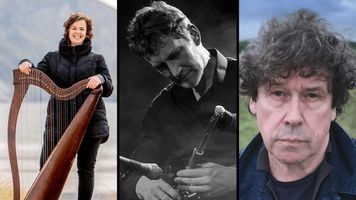
Went to hear Laoise and Tiarnán playing in Belfast. Their research and dedication to the Bunting collection is inspiring and uplifting.
Really enjoyed their interpretation of what they gleaned from the collection. Educational lively and informative throughout.
Went to hear Laoise and Tiarnán playing in Belfast. Their research and dedication to the Bunting collection is inspiring and uplifting.
Really enjoyed their interpretation of what they gleaned from the collection. Educational lively and informative throughout.
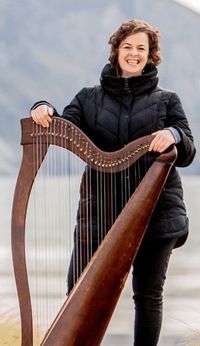
I have always enjoyed the music that this duet makes even before their first CD « Ar Lorg na Laochra: which I launched for them.
Their new departure exploring the Bunting collection is commendable not only for their research and effort but for the
artistic and creative...
I have always enjoyed the music that this duet makes even before their first CD « Ar Lorg na Laochra: which I launched for them.
Their new departure exploring the Bunting collection is commendable not only for their research and effort but for the
artistic and creative...
Edward Bunting
By Harry White
Edward Bunting, (1773–1843), musician and collector of Irish music, was born in February 1773 in Armagh, the youngest son of a mining engineer from Derby who had settled near Dungannon. His mother, Mary (née O'Quinn), was Irish. There were two other children of the marriage, Anthony and John, and all three sons became well-known musicians. After the death of his father Bunting was sent to Drogheda to study music with his brother (from 1782) and in 1784 he was apprenticed to William Ware organist at St Anne's church, Belfast, as sub-organist and assistant teacher. Bunting's early prowess as a musician meant that his reputation soon surpassed that of his teacher. By the turn of the century he was already among the most prominent musicians in Belfast, and was appointed organist of the Second Presbyterian church, Rosemary Street, in 1806. He had a large private practice as a piano teacher and was equally renowned as a performer.
In the early years of the nineteenth century Bunting was a primary figure in the promotion of European art music in the city and central to the success of the Belfast Music Festival (1813), in which he figured as a soloist in the performance of a piano concerto by Mozart and as conductor in the first Belfast performance of Handel's ‘Messiah’. He was a founder member of the Belfast Harp Society (1808–13) and the Irish Harp Society (1819–39). He lived in Belfast as a member of the McCracken household in Donegal Street from his arrival in the city until 1819, when he married Marianne Chapman, the daughter of a Belfast school principal. The couple moved to Dublin in the same year. There were three children of the marriage. Through the influence of his brother Anthony, Bunting was appointed organist in St Stephen's church and was briefly partner in a music warehouse.
By his own admission, the pivotal episode in Bunting's career was his participation in the Belfast Harp Festival, from 11 to 14 July 1792, in which he notated the performances of several of the competitors, including Denis Hempson (O'Hempsy) (then 97 years old), Arthur O'Neill, and Charles Fanning. Encouraged by James O'Donnell, a member of the committee responsible for the festival and subsequently a lifelong correspondent on the subject of Irish music, Bunting travelled to Derry, Tyrone, and ‘the province of Connaught’ in order to collect some sixty-six harp melodies, which he published in 1797 in a volume entitled 'A general collection of the ancient Irish music', containing a variety of admired airs never-before published and also the compositions of Conalan and Carolan, collected from the harpers etc., in the different provinces of Ireland and adapted for the pianoforte, with a prefatory introduction by Edward Bunting (London).
Of the three collections which Bunting published throughout his life (the other two were in 1809 and 1840), the 'General collection of ancient Irish music' was to prove by far the most significant; it can fairly be described as the most seminal and influential publication in the history of Irish music. It inaugurated a long tradition of systematic music collection which has continued to flourish in Ireland; it provided the primary stimulus for the decisive transformation of the ethnic repertory in the Irish Melodies of Thomas Moore, and set the terms (reluctantly, from Bunting's own point of view) for a notably political reception of Irish music throughout the nineteenth century. In this last respect, Bunting's own intimacy with the McCracken family, and thereby with leading members of the United Irishmen, secured a conventional understanding of Irish music as an expression of cultural and political autonomy. Although Bunting himself did not press home such an understanding in his published work, it nevertheless exerted an influence on the shape of his second volume, entitled 'A general collection of the ancient music of Ireland', arranged for the pianoforte: some of the most admired melodies are adapted for the voice to poetry chiefly translated from the original Irish songs by Thomas Campbell Esq., and other eminent poets, to which is prefixed a historical and critical dissertation on the Egyptian, British and Irish harp, by Edward Bunting. Between 1797 and 1809, collections of Irish airs by Smollet Holden (d. 1813) and Lady Morgan, together with the appearance of the first two volumes of Moore's Irish Melodies, considerably reduced the novelty of Bunting's enterprise.
Of greater importance, however, was the fact that Bunting's scholarly endeavours in the preparation of the second volume (London, 1809) were compromised by an admixture of personal and political circumstances. Bunting was not a United Irishman, but counted among his closest companions those who were. His loyalty to such friends must have been strained in the extreme when his major collaborator on the second volume, Patrick Lynch, turned king's evidence against their mutual friend Thomas Russell, who was hanged for high treason. Bunting had embarked with Lynch on an extensive tour of Connacht in 1802, when Lynch collected and transcribed the texts of some 150 songs, many of which were intended for inclusion in what became the 1809 volume. The full extent of these texts – and of much music besides – has been established through the work of Colette Moloney, who in 2000 published a catalogue raisonné of Bunting's Irish music manuscripts, latterly deposited in QUB. In any case, to have fair copy of so much material to hand and yet to withhold it from publication gives some notion of Bunting's distress at Lynch's act of betrayal and Russell's execution. That Bunting was also unnerved by the success of Moore's arrangements is attested by George Petrie, who insisted that Bunting deeply regretted having rejected an offer from Moore to provide English verses for the 1809 volume. Moore in turn was relieved by the appearance of Bunting's third volume (which in a famous diary entry for 15 July 1840 he described as ‘a mere mess of trash’), because it did not contain material sufficient to induce him to compile another volume of the Melodies.
This third volume is entitled 'The ancient music of Ireland, arranged for the pianoforte'. To which is prefixed a dissertation on the Irish harp and harpers, including an account of the old melodies of Ireland. By Edward Bunting (Dublin, 1840). It formed the culmination of Bunting's career as an antiquarian, and provided him with an opportunity to repudiate Moore's romantic reading of Irish music as an overtly political expression of loss (‘there was never anything more erroneous than this idea’). This volume was in part a collaborative venture. Having returned to the limitations of the first volume (i.e. largely untexted arrangements of the tunes), Bunting stressed in his preface the importance he attached to the authentic preservation and transmission of the ethnic repertory. His discourse on musical terminology, vocal style, and ornamentation is more thoroughgoing than in the earlier volumes, and the inclusion of chapters by Samuel Ferguson and George Petrie silently affirms the authenticity of Bunting's own scientific descriptions and melodic classifications. Bunting's insistence on the ‘animated’ character of performance ‘which . . . accords more with the natural character of the Irish than the drawling dead, doleful and die-away manner in which all our airs were and are in many instances played and sung today’ depended, as ever, on his experience of the Belfast Harp Festival, but also served as a useful corrective to Moore's influential romanticism. Nevertheless, Bunting's efforts in this volume to distinguish between ‘ancient Irish music’ (i.e. the remnants of a classical Gaelic musical culture which he found originally in the performances of Denis Hempson, a harper who ‘scorned the music of Turlough Carolan' and the contemporary style of Irish music as he found it in his collecting tours did not always survive the immediate reception history of the collections themselves.
Writing in 1840, Robert Chambers remarked that ‘We close with regret Mr Bunting's volume because we believe that with it we take leave of the genuine Music of Ireland. It must not be regarded as a Musical publication alone, but as a National Work of the deepest antiquarian and historical interest. Were we to institute a literary comparison, we could say that Moore's Irish Melodies had about them all the fascination of poetry and romance, Bunting's collections all the sterner charms of truth and history.’ This reading typifies a failure to discriminate between Bunting's varying scientific classifications of Irish music, and favours instead a more homogenous characterisation of Irish music, dialectically opposed to the drawing-room pleasantries of Moore.
Modern scholarship has restored the political significance of Bunting's antiquarianism (and Moore's Melodies, for that matter), but the redemptive quality of his work (insofar as he preserved so much music that would otherwise have been lost) has been emphasised at the expense both of his organology in respect of the harp and of his scientific investigations into the provenance of the music he collected. He died 21 December 1843 in Dublin.